
Unlocking Ávila's Architectural Treasures: A Comprehensive Guide
December 9, 2025
By Editor
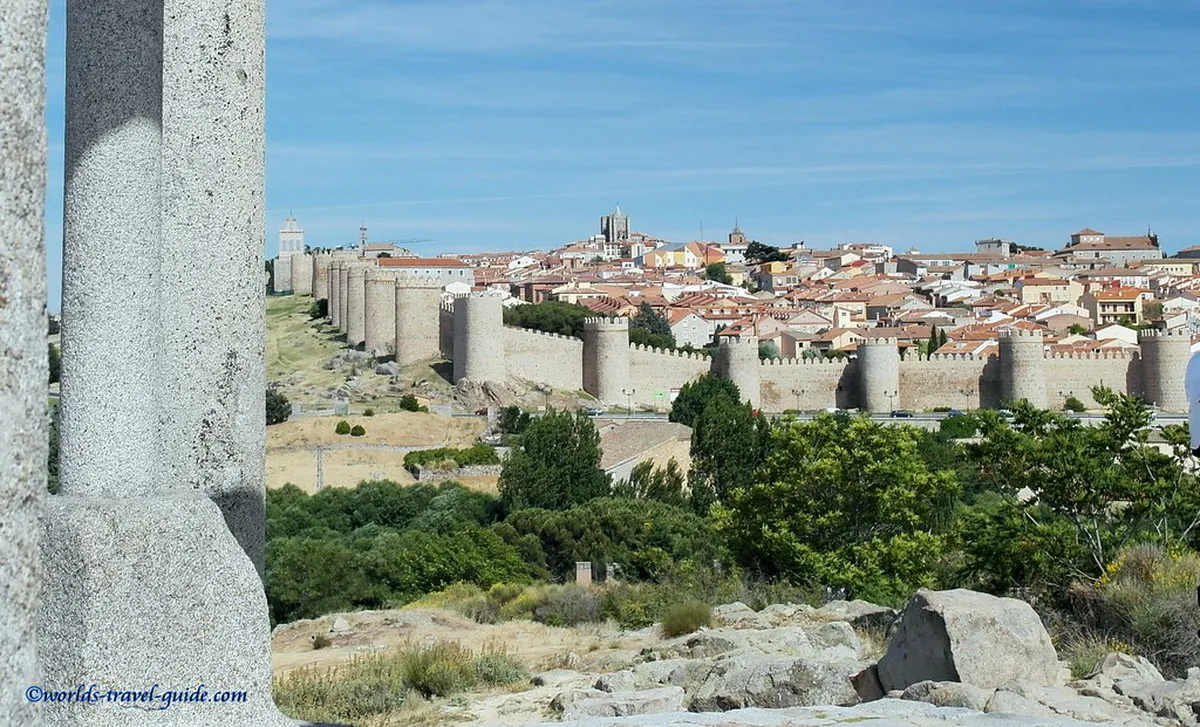
Table of Contents
An Architectural Journey Through Ávila: Walls, Cathedrals, and Palaces
The Impregnable Walls of Ávila: A Masterpiece of Medieval Fortification
Ávila's defining feature and a prime example of medieval military architecture, the city walls are a UNESCO World Heritage site and truly awe-inspiring. Constructed primarily between the 11th and 14th centuries, these formidable fortifications stretch for over 2,500 meters, encircling the entire old town. The design is a marvel of strategic engineering, featuring 88 semicircular towers and nine monumental gates, each with its own defensive characteristics. The construction involved local granite, expertly quarried and precisely cut by medieval stonemasons, showcasing advanced masonry techniques for its time. From their inception, the walls served as a vital defense against Moorish incursions, and their preservation today is exceptional, allowing visitors to vividly imagine life in a fortified medieval city. To truly appreciate their scale and design, consider walking along accessible sections of the ramparts, which offer unparalleled panoramic views both into the city and across the surrounding landscape. Understanding the key architectural features, from the machicolations to the various types of battlements, enriches the experience. For a deeper dive into their construction, explore our guide on how medieval stonemasons built Ávila's walls. You can also learn who built these impressive structures and explore the different types of fortified towers. The various city gates of Ávila each possess unique historical and architectural significance, serving as grand entry points into the historic core.Ávila Cathedral: Fortress and Faith United
Ávila Cathedral presents a unique architectural phenomenon: it is not merely a place of worship but an integral part of the city's defensive fortifications. Its apse, known as the 'cimorro,' is built directly into the eastern section of the city walls, functioning as a sturdy bastion complete with battlements and arrow slits. This extraordinary dual purpose is a testament to Ávila's tumultuous history and the strategic importance of its religious structures. The cathedral's construction began in the late 11th century in the Romanesque style, with significant Gothic additions from the 13th to 15th centuries. This transition from the robust Romanesque to the soaring Gothic is evident in its various sections. Inside, the sheer scale is breathtaking, particularly the majestic nave and the intricate chapels. Highlights include the magnificent retrochoir, a masterpiece of Renaissance sculpture, and the vibrant stained-glass windows that flood the interior with light. The main architect, Maestro Fruchel, is credited with much of its early Gothic work. Don't miss exploring the interior of Ávila Cathedral, especially its unique retrochoir, and understanding the defensive elements of the fortress-cathedral. This sacred stronghold is a compelling example of Ávila's distinct architectural identity.Romanesque Masterpieces: Ávila's Enduring Stone Churches
Beyond the towering walls and the fortress-cathedral, Ávila is home to an exceptional collection of Romanesque churches, each offering a glimpse into the city's early medieval piety and architectural prowess. These structures, characterized by their robust stone construction, semi-circular arches, and often minimalist yet powerful ornamentation, reflect the resilience and spiritual depth of the period. The most prominent example is the Basilica de San Vicente, located just outside the walls. This basilica is a national monument and a quintessential Romanesque masterpiece, notable for its grand scale, tripartite apse, and the exquisite cenotaph of Saints Vincent, Sabina, and Cristeta. Its architectural history reveals a fascinating evolution of styles. Equally significant is the Iglesia de San Pedro, featuring a striking rose window and a beautiful Romanesque portal. The Iglesia de San Andrés, with its ancient origins, also merits attention for its raw, powerful simplicity. A walking tour of Ávila's Romanesque churches allows you to discover these gems firsthand, uncovering hidden architectural details and understanding the foundational styles that shaped Ávila. Don't forget to visit the crypt of San Vicente Basilica for a truly historical experience.Gothic Grandeur and Isabelline Flourishes: Monasterio de Santo Tomás
🎯 Insider Tip: Discover the best Madrid experiences with Viator Tours!
Renaissance Palaces and Noble Residences
Beyond its formidable defenses and sacred spaces, Ávila boasts a collection of impressive Renaissance palaces, reflecting the prosperity and influence of its noble families from the 15th and 16th centuries. These secular buildings mark a shift in architectural priorities from pure defense to more ornate and comfortable living. Unlike the fortified castles of earlier periods, Renaissance palaces embraced classical ideals of symmetry, proportion, and decorative elements inspired by Roman antiquity. Key examples within Ávila's walls include the Palacio de los Velada, now a hotel but retaining much of its original grandeur, the Palacio de Superunda, and the Palacio de Polentinos, which features an elegant courtyard and impressive facade. These palaces often reveal their beauty not just from their exterior, but within their hidden courtyards, grand staircases, and richly decorated salons. While some remain private, many are now accessible to the public, offering a glimpse into aristocratic life centuries ago. Consult our map of Renaissance palaces to visit in Ávila to plan your exploration. Learning to identify Renaissance features, such as classical columns, arched windows, and carved coats of arms, will enhance your appreciation. Our guide to the palaces of Ávila also shares insights into the noble family history behind these grand residences, showcasing Ávila's significant secular architecture. For those interested in visiting historic houses, there are several open to the public.The Subtle Charms of Mudejar and Baroque: Convento de Santa Teresa
Ávila's architectural narrative isn't complete without acknowledging the subtle yet significant presence of Mudejar and the later, more dramatic Baroque styles. Mudejar architecture represents a fascinating fusion of Christian and Islamic artistic traditions, often characterized by intricate brickwork, geometric patterns, and horseshoe arches. While not as overtly dominant as in some other Spanish cities, you can discover Mudejar elements in the brick towers of some churches or in decorative motifs within religious complexes. This style reflects the coexistence of cultures during and after the Reconquista, demonstrating the enduring influence of Mudejar art on Ávila's built environment. Moving forward in time, the Baroque style, known for its grandeur, elaborate ornamentation, and dramatic flair, is perhaps best exemplified in Ávila by the Convento de Santa Teresa. Built on the birthplace of the revered Saint Teresa of Ávila, this 17th-century convent and church showcase the characteristic opulence of Baroque design, with a richly adorned interior, impressive altarpieces, and a sense of theatricality designed to inspire devotion. The Baroque architecture of the Santa Teresa Convent offers a striking contrast to the earlier medieval styles. Visitors can explore the sanctuary and museum to see inside the Santa Teresa Convent, appreciating its historical and spiritual significance.Beyond the Walls: Strategic Viewpoints and Hidden Gems
To fully appreciate the architectural majesty of Ávila, it's essential to step both inside and outside its famous walls. One of the most iconic vantage points is Los Cuatro Postes, a stone monument just outside the city, offering a breathtaking panoramic view of the entire walled city, especially magical at sunset or when the walls are illuminated at night. This viewpoint is not only historically significant, with religious meaning associated with Saint Teresa, but also provides the best photo opportunities for the walls. Within the city, navigating the medieval streets reveals countless hidden architectural gems. Seek out the tranquil beauty of Ávila's cloisters, such as those at the Cathedral or Santo Tomás, which offer peaceful retreats from the bustling streets. Many noble palaces feature hidden courtyards and patios, some of which are accessible to the public, providing intimate glimpses into the city's private architectural spaces. Our guide to cloisters in Ávila and tips on finding hidden patios will help you uncover these often-overlooked treasures. For the best panoramic views of Ávila's city walls, and indeed the entire city, Los Cuatro Postes is unsurpassed, providing excellent architectural viewpoints. Understanding how the city is structured and navigating its medieval streets will enhance your exploration.Capturing Ávila: Photography and Self-Guided Tours
⭐ Recommendation: Don't miss out on amazing Madrid tours - book now!
Preservation and Evolution: UNESCO Heritage and Architectural Details
Ávila's status as a UNESCO World Heritage site underscores the critical importance of its architectural preservation. The city diligently works to maintain its ancient structures, balancing modern needs with historical integrity. This commitment ensures that visitors can experience Ávila's architectural evolution across centuries, from its pre-medieval origins and potential Roman influences, to its medieval fortifications and later developments. Every stone tells a story. Look closely at the facades to discover intricate carvings, gargoyles, and coats of arms that adorn many buildings, offering insights into the patrons and eras of their construction. Our architectural details guide can help you spot these fascinating elements. The types of stone used in Ávila's buildings also tell a tale of local resources and craftsmanship. Understanding the timeline of major construction periods provides a crucial historical context. Even the old Jewish Quarter, though subtly, presents its own unique architectural clues. The challenges of preserving ancient walls are considerable, yet Ávila's dedication ensures its architectural legacy endures. Discover famous architects who shaped the city and learn about who funded these monumental constructions, adding layers to your architectural understanding.Frequently Asked Questions
What is Ávila most famous for architecturally?
Ávila is most famous for its remarkably preserved medieval walls, which completely encircle the Old Town. These fortifications are considered among the finest examples of medieval military architecture in Europe and are a UNESCO World Heritage site.
Is Ávila Cathedral truly a fortress?
Yes, Ávila Cathedral is unique in that its apse is integrated directly into the city walls, featuring battlements and arrow slits. This design allowed it to function as both a place of worship and a crucial defensive bastion for the city, earning it the moniker 'fortress-cathedral'.
What architectural styles can be found in Ávila?
Ávila showcases a rich blend of architectural styles, primarily Romanesque (e.g., Basilica de San Vicente), Gothic (e.g., the Cathedral, Monasterio de Santo Tomás), including the unique Isabelline Gothic, subtle Mudejar influences (often in brickwork), and elegant Renaissance (e.g., noble palaces).
Can you walk along the top of Ávila's walls?
Yes, significant sections of Ávila's medieval walls are accessible for walking. This offers visitors an unparalleled opportunity to experience the city from above, providing breathtaking panoramic views of the historic center and the surrounding landscape.
What is the best viewpoint to see the Ávila walls?
Los Cuatro Postes (The Four Posts), a monument located just outside the city, offers the most iconic and panoramic view of the entire walled city. It's particularly stunning at sunset or when the walls are illuminated at night, making for incredible photographic opportunities.
Key Takeaways
🎯 Insider Tip: Discover the best Madrid experiences with Viator Tours!
- Ávila is renowned for its UNESCO-listed medieval walls, which are among the best-preserved in the world and open for walking.
- The Ávila Cathedral is unique for its integration into the city walls, functioning as both a place of worship and a defensive bastion.
- The city's architecture encompasses a spectrum of styles, including robust Romanesque, soaring Gothic, intricate Mudejar, and elegant Renaissance.
- Key sites like the Basilica de San Vicente and Monasterio de Santo Tomás exemplify the city's rich religious and historical architecture.
- Exploring Ávila's architecture can be enhanced by walking the walls, visiting noble palaces, and seeking out panoramic viewpoints like Los Cuatro Postes.
- Ongoing preservation efforts maintain Ávila's status as a living museum of architectural history and a cultural treasure.