
Triana Bridge Architecture: Seville's Iconic Landmark
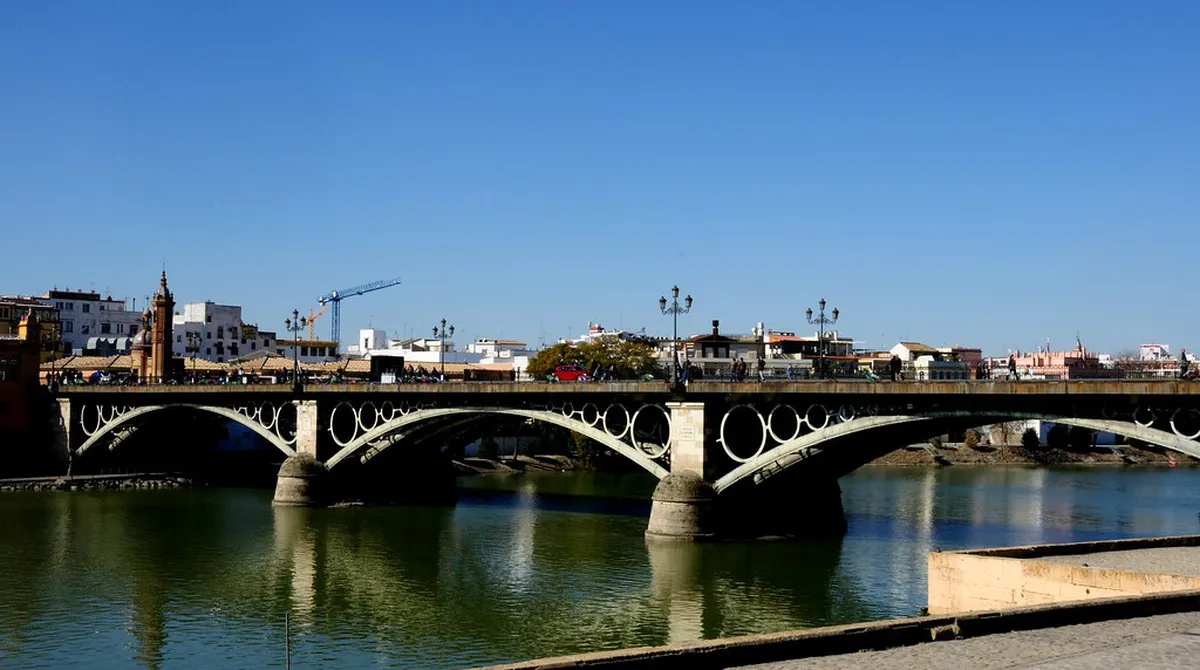
Table of Contents
Exploring the Enduring Architecture of Triana Bridge
Seville boasts stunning historical sites. The Triana Bridge stands out. Its architecture captivates visitors. It connects the city center to Triana.
This guide explores its unique design. Discover its story for 2025. Explore more of Seville's architecture. It is a vital part of Seville's historic bridges.
The Historic Significance of Puente de Isabel II
Before the Triana Bridge, a boat bridge existed. It was unreliable and often damaged. Seville needed a permanent river crossing. This led to a grand architectural vision.
Construction began in 1845. It finished in 1852. The bridge replaced the old pontoon structure. Queen Isabel II officially inaugurated it. Hence, its formal name is Puente de Isabel II.
The design drew inspiration from Paris. Specifically, the Pont du Carrousel was a model. French engineers Gustave Steinacher and Ferdinand Bennet designed it. This marked a modern era for Seville.
This bridge quickly became essential. It linked Triana, a vibrant district. It facilitated trade and daily life. It is truly a cornerstone of Seville's most famous bridges.
Its history reflects Seville's growth. It is one of the oldest iron bridges in Spain. Its endurance is remarkable. It serves as a testament to 19th-century engineering. Discover more about Roman influence in Seville.
Understanding the Iron Architecture of Triana Bridge
The Triana Bridge architecture is distinct. It features robust iron construction. This material was revolutionary. It offered strength and durability.
The bridge utilizes a classic arch design. Each arch supports the road above. Cast iron columns form its primary structure. These columns are hollow and strong.
Forged iron bars connect these columns. They create a stable framework. This intricate ironwork is visually appealing. It speaks to 19th-century industrial design.
The bridge's original foundations were complex. They used caissons, a new technique. This ensured stability in the Guadalquivir River. It was an engineering marvel for its time.
The Triana Bridge became a model. Its successful construction inspired others. It stands as a symbol of progress. Learn about other modern architecture in Seville. The bridge has undergone renovations to ensure its safety. However, its original architectural integrity remains. It connects past and present Seville. Explore Giralda Tower architecture for another iconic structure.
Key Design Elements and Engineering Marvels
The bridge spans the Guadalquivir River. It measures approximately 150 meters long. The width allows for both vehicles and pedestrians. Its scale is impressive for its age.
Four large stone piers support the arches. These piers anchor the bridge firmly. They are made of strong masonry. These ensure structural stability against river currents.
Decorative elements enhance its appearance. Ornate lampposts line the walkway. These add a touch of elegance. They illuminate the bridge at night.
The robust iron lattice work is striking. It creates a rhythmic pattern. This pattern is both functional and aesthetic. It exemplifies bridge engineering.
Its innovative use of iron set a precedent. It showcased new possibilities. This bridge influenced future designs. Many structures borrowed its techniques. Discover more about the innovative Plaza de España design. This bridge also demonstrates advanced construction. Its legacy is significant for civil engineering. Consider a photography tour of Seville's bridges.
Experiencing the Triana Bridge in 2025
⭐ Recommendation: Don't miss out on amazing Seville tours - book now!
Visiting the Triana Bridge is a must. It offers fantastic views of Seville. Walk across its historic span. Enjoy the vibrant Triana neighborhood.
Pedestrian access is excellent. You can stroll leisurely in 2025. Take photos of the river and city skyline. The bridge is always open to the public.
Explore the Triana market nearby. It is full of local flavors. Enjoy tapas and flamenco in Triana. This bridge connects you to rich culture.
Many self-guided walking tours include the bridge. It's a perfect starting point. Cross into Triana for a unique experience. This area boasts distinct Triana neighborhood buildings. Consider visiting at sunset. The bridge lights up beautifully. This creates a magical atmosphere. It's ideal for romantic strolls.
Frequently Asked Questions
⭐ Recommendation: Don't miss out on amazing Seville tours - book now!
What materials were used in the Triana Bridge architecture?
The Triana Bridge primarily uses cast iron. It also features robust stone piers. This combination ensured its strength. It was an advanced construction for its era.
Can pedestrians walk across the Triana Bridge?
Yes, pedestrians can absolutely walk across. The bridge offers dedicated walkways. Enjoy stunning river and city views. It's a key part of any Seville architecture tour.
Who designed the Triana Bridge?
French engineers Gustave Steinacher and Ferdinand Bennet designed it. They drew inspiration from the Pont du Carrousel. Their vision created this lasting structure. Learn about Anibal Gonzalez for another influential Seville architect.
Is there a cost to cross the Triana Bridge?
No, crossing the Triana Bridge is completely free. It serves as a public thoroughfare. Enjoy its architectural beauty. No landmark tickets are needed here.
The Triana Bridge is more than a crossing. Its architecture tells a vital story. It represents engineering innovation and beauty. This bridge is a true Seville icon.
Plan your visit to admire its design. Experience its connection to Triana. Discover more Seville's historic bridges during your trip. Its enduring legacy awaits you.
Key Takeaways
🎯 Insider Tip: Discover the best Seville experiences with Viator Tours!
- The Triana Bridge features groundbreaking 19th-century iron architecture.
- It connects central Seville to the vibrant Triana district.
- Enjoy stunning views and free pedestrian access 24/7 in 2025.